The study analyzed more than 331,000 videos from what the study authors categorize as a broad, right-wing spectrum to paint a portrait of exactly how viewers become acclimated to increasingly far-right views — and the central role that YouTube‘s algorithm, which recommends related videos for its users, plays in the radicalization process. Douglas Murray, who originally became prominent as a “New Atheist,” is another IDW figure who has slotted perfectly into the conventional far right via his anti-immigrant screeds which routinely propagate white nationalist talking points and anti-Muslim bigotry. He’s also been a cheerleader for Israel’s massacre in Gaza, claiming that all Palestinians are responsible for the terrorist attacks Hamas carried out Oct. 7 of last year, a violent sentiment no different from what Al Qaeda routinely says about its civilian targets. Ben Shapiro, an Orthodox Jewish podcaster whose political views are so extreme that he has even appeared on a neo-Nazi podcast, is Peterson’s Daily Wire colleague.
But where dark web intellectuals veer from analysis of that phenomenon into self-pity is in their consistent tendency to treat all skeptical criticism of their purported commitment to truth-seeking as further symptoms of political correctness gone mad. Precisely because we have changed so much, we have forgotten how bad things used to be. For decades, contrarianism on questions of race and gender — ranging from opposition to certain feminist projects or to affirmative action, to flirtation with the idea that black culture and even black brains were intrinsically inferior — was part of the intellectual mainstream of the center. Andrew Sullivan published an entire issue of the New Republic devoted to presenting, and debating, Charles Murray’s claim that black people were, on average, less intelligent than white people. Whether the figures involved with the IDW can take credit for opening up the Overton window, though, is doubtful.
What Is The ‘Intellectual Dark Web’?
Outside of the progressive academics and activists whose ideology came to dominate the West in the second decade of the twenty-first century, arguably no group influenced public discourse as much as the Intellectual Dark Web. Indeed, as Roberts argues, the Intellectual Dark Web’ s full legacy and historical impact is yet to be determined. The ideas and principles its members championed continue to define not only the ongoing effort to protect universal rights and individual freedoms but also the current and future direction of global policy and politics. What is apparently so novel about the “intellectual dark web” is not just its savvy use of Patreon or YouTube, but its claim to be eclectic and transpartisan. It has become typical for the members of this club when they appear in public — on Harris’s or Joe Rogan’s podcasts, for example, or on Peterson’s and Dave Rubin’s YouTube channels — to stress emphatically both their ideological divides and their respect for the intellectual virtues that they believe allow them to overcome them.
Discover Content
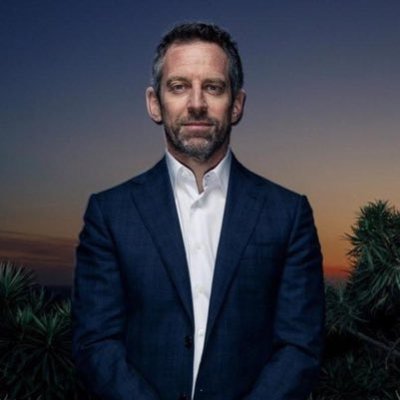
The ranks of the cranks also include author and podcaster Maajid Nawaz, briefly mentioned in the original IDW piece as a “former Islamist turned anti-extremist activist”—now a vaccine and 2020 election conspiracy theorist, and most recently seen boosting the Kremlin’s efforts to link Ukraine to the ISIS terror attack in Moscow. Despite the term suggesting cohesion, the IDW is not a formal group but a categorization for individuals promoting open dialogue on sensitive topics, ranging from political correctness to free speech. The diversity within the grouping is significant, with members holding varied—and sometimes conflicting—ideological stances. For instance, while Sam Harris has participated in discussions with other IDW figures, he has explicitly critiqued the label and distanced himself from some of the collective’s broader political implications. After the 2020 US presidential election, in response to statements by some of those considered members of the IDW that the election was stolen, Harris was quoted as saying he was “turning in his imaginary membership card to this imaginary organization.”
But writers who suggest that black people are relatively more likely to be stupid are likely to have a much rougher time of it than in the 1990s or the aughts. The same is true for men who call for women who have had abortions to be hanged by the neck until dead. I’m skeptical that the left knows what to do, I’m very skeptical of what the left advances in terms of policy proposals, but in terms of my values, they haven’t changed at all. The interesting thing, though, is having been effectively evicted from the left, we ran into all sorts of other people who we thought might be a bit right of center, who it turned out were actually also left of center and had also been similarly evicted and then misportrayed. So there is a way in which everybody should think twice about why you expect the people are on the political spectrum where you think they are, because maybe they aren’t.
The Rationale For The Federal Circuit’s ‘Radical Left’ Tariff Decision Is Fundamentally Conservative
Key figures often mentioned in this context include Jordan Peterson, Sam Harris, Ben Shapiro, and Joe Rogan. Each contributes sometimes controversial viewpoints on cultural, political, and philosophical issues, utilizing digital platforms to reach a global audience. Recognizing that these dark web ideas are conservative might also help clear up space for people on the left of center who might share some criticisms of political correctness or campus activism without indulging the right-wing implications of these ideas. Many people across the political spectrum recognize that political correctness and its variants are not meaningless terms. It is no surprise that college students often experiment with activist projects that push the boundaries of liberal norms, and the members of the intellectual dark web are not the only people to have worried about the implications of some student rhetoric. The intellectual dark web appears with each passing day to be earning itself a place in the American conservative tradition.
The “Intellectual Dark Web,” Explained: What Jordan Peterson Has In Common With The Alt-right

The fact that many of these figures have no links to the conservative movement or denounce the Republican Party is hardly evidence to the contrary. Allan Bloom was a member of the Democratic Party, and the campus war debates he helped to start provided the opportunity for many younger writers to gain national notoriety as conservatives for the first time. Despite some of the novelty attributed to the dark web intellectuals, perhaps the signs of their belonging to the right have always been there. Dave Rubin’s YouTube show and Harris’s podcast, for example, have featured a number of mainstays of the old PC debates, including D’Souza and Charles Murray. And though Christina Hoff Sommers may appear to break with neoconservative opponents of the women’s movement such as Midge Decter and Gertrude Himmelfarb by calling her video blog “The Factual Feminist,” one should not fail to notice that the channel is hosted by the American Enterprise Institute, the think tank where both elder women were once affiliates. These sorts of claims are once again continuous with the decades-old conservative campaign against political correctness.
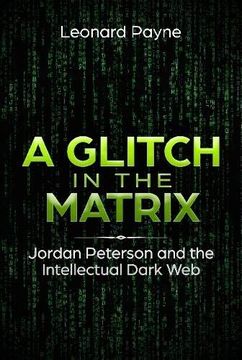
While the publisher didn’t choose to communicate the nature of the complaints to Roberts, I think it is easy to guess. The book was politically incorrect and didn’t pay due homage to “cultural” (scare quotes intended) norms. Once upon a time there was a good book titled “The Way of the Intellectual Dark Web,” by Jamie Q. Roberts.
Share The Intellectual Dark Web Podcast
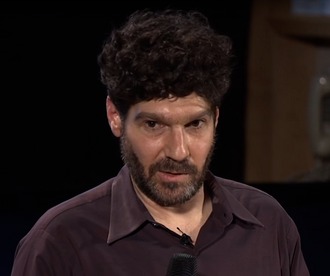
I would say that Bret and I spent 14, 15 years in classrooms with mostly millennials, and it’s really easy to disabuse people of these ideas in real time when you have time, when you can build trust, when you can build community, and then yank the rug out from under people when they say things that are actually batshit crazy. A series of administrative developments at the college, as well as the introduction of some experimental initiatives, helped transform, or invert, the idea of the event following the 2016 election. Social unrest in Olympia, and the merger of activist groups on campus precipitated a newer, more effective, design for this unique day of advocacy. “Jacob Pius,” who goes by @Yuyencian on Twitter, recently posted a “Map of the national independence movement in Far East” (above). The map includes Liu’s “ethnic invention” of Basuria as well as other polities, including Yehetland, Komeseland, Goetland, Tshiechuria, Hakkaland, and also East Turkestan and Tibet. For Liu and his followers, these proposed nations organized around ethnicity and language are part of a struggle for independence from the People’s Republic of China and other states in Asia.
For Nearly A Century, Republicans Have Been Pretending To Be The ‘real Liberals’

YouTube also discontinued its “related channels” feature, which factors heavily in the study, back in May, according to a post on the YouTube community forum. But even in light of these changes, due to the lack of transparency surrounding YouTube’s algorithms, it’s difficult to know how effective these changes have been, or whether an even broader swath of YouTube users were exposed to such content prior to the researchers authoring their study. The financial and foreign policy disasters brought on by Bush’s policies led the public to overwhelmingly reject Republicans in 2008 as the first-term Democratic Sen. Barack Obama swept into the White House. Almost immediately, however, Republicans were ready with another rebrand, the Tea Party movement, which insisted that it was nonpartisan, while being financially backed by the same right-wing oligarchs who’d backed Reagan and the Bushes, and staffed by same radical Christian fundamentalists they had enabled.
All of this seems to me to be kept in the dark—crucial, basic definitions deliberately omitted, which is not just anti-philosophical but anti-intellectual. In this instance, McWhorter is referencing actual critical race theory, not the catch-all buzzword pushed by Rufo et al. Eight years ago, Shapiro wrote that Barack Obama was “the worst president in American history.” If Shapiro thinks Biden is worse than Obama, then logically he thinks Biden is the worst president in American history, which at least bodes well for the reputations of James Buchanan and Andrew Johnson. Jamie Q. Roberts has written a valuable intellectual history for non-intellectuals. Per the subtitle of his book, Roberts suggests that the IDW has served its purpose. Some of the people mentioned in it, such as Sam Harris, have already distanced themselves from IDW to maintain their intellectual independence.
- Like nearly all libertarians, the members of the IDW were insistent that they were not just Republicans with an accent, and that in fact, they were actually leftists.
- A teacher has no reason to teach if they are unwilling to learn from their students.
- In recent years, a group has emerged that, while existing outside of the mainstream, represents the antithesis of the intellectual dark web.
- He argues that religion has historically benefited social evolution, although it is now less necessary and more toxic than, say, biology.
- Reagan’s success set the tone for future Republican politics, with the party oscillating between figures who embraced the core extremism and those who papered it over.
- This was done beneath the banner of free speech, a democratic concept that has long invoked peaceable assembly and the right to organize against injustice.
Springer Nature or its licensor (e.g. a society or other partner) holds exclusive rights to this article under a publishing agreement with the author(s) or other rightsholder(s); author self-archiving of the accepted manuscript version of this article is solely governed by the terms of such publishing agreement and applicable law. In 1982’s Orality and Literacy, Ong theorised that literacy is so profoundly mind-altering that it “restructures consciousness”. Confined to a relatively small elite until the late Middle Ages, following the invention of the printing press this consciousness revolution spread, by degrees, to a majority of Western populations. As documented by historian Elizabeth Eisenstein, this had far-reaching disruptive consequences including the Reformation, the Thirty Years’ War, the modern nation-state settlement, and the scientific and industrial revolutions. Fixing our institutions is necessary before society can make real progress, Weinstein suggests, and a solution doesn’t lie solely with the left or right.
Free Speech As The Path To Truth
The content of this site is published by the site owner(s) and is not a statement of advice, opinion, or information pertaining to The Ohio State University. Neither text, nor links to other websites, is reviewed or endorsed by The Ohio State University. Liu Zhongjing believes that the Chinese, beginning from the administration of the Qin Dynasty, had become a fellaheen nation. Therefore, there is no Han ethnic group because the supposedly Han people are fellaheen. Fellaheen is not an ethnic identity, so they are simply slaves laboring under imperial bureaucracy.
But you won’t be able to buy it, because the publisher suspended the book from sales shortly after publication. This can be seen as a variation on British historian Robert Conquest’s “second law of politics” (often attributed to British conservative pundit John O’Sullivan), which holds that any organization not explicitly right-wing will sooner or later become left-wing. THESE ISSUES ALSO HAVE SOME relevance to Bari Weiss’s own career six years after she first introduced the IDW to the wider public. In July 2020, Weiss quit the Times in protest against the forced resignation of her boss James Bennet, then the paper’s editorial-page editor, over an op-ed he had published by Sen. Tom Cotton (R-Ark.). Weiss subsequently set up a Substack newsletter that became a multi-contributor magazine, the Free Press, and a podcast—thus migrating into the independent media-land of the IDW.
Related Content
He became a target of progressive cancel culture by platforming guests who debunk the received truths of the left, such as Abigail Shrier and Dr James Lindsay. LIWC is a text analysis program that analyzes individual or multiple language files quickly and efficiently. It is designed to be transparent and flexible, allowing users to explore word use in various forms. LIWC is used in research to analyze the ways people use words when communicating, which can provide rich information about their beliefs, fears, thinking patterns, social relationships, and personalities.